
The IB Primary Years Programme at IVY
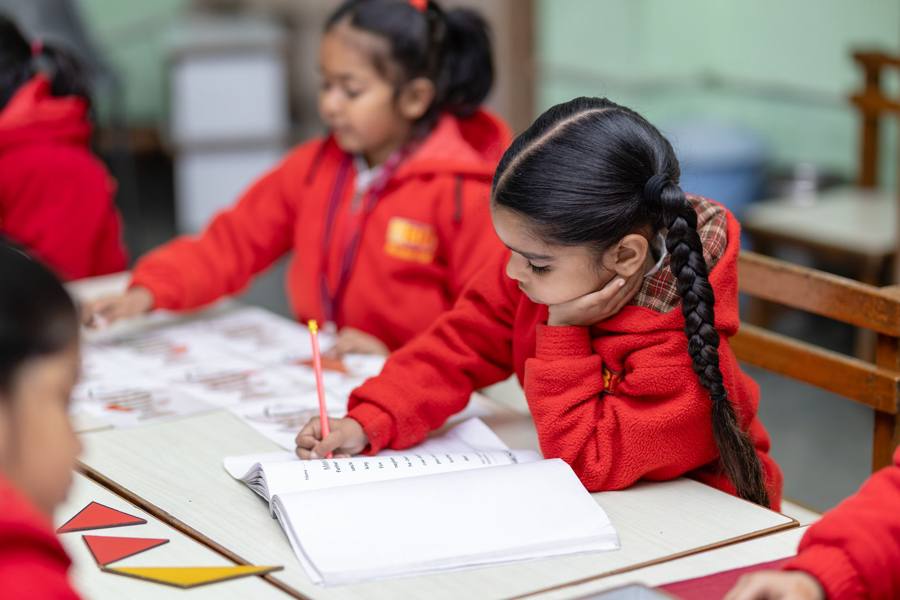
The IB Primary Years Programme (PYP) is a transdisciplinary, inquiry-based framework for learners aged 3 to 12. At IVY it runs from EY1 to Grade 6 and nurtures the whole child through inquiry, action and reflection, while building strong academic foundations.
We integrate the PYP with the Oxford International Curriculum, so open inquiry is balanced with clear subject outcomes and academic rigour.
From the IB framework
- Inquiry-based, concept-driven learning
- A focus on learner profile attributes
- Reflection and action-oriented learning
- Transdisciplinary integration
From the Oxford International Curriculum
- Skills-based academic progression
- Global benchmarks for literacy, numeracy and science
- Diagnostic, personalised assessment
- Subject rigour with spiral progression
English
Communicate, explore and create.
Mathematics
Think, reason and solve.
Science
Investigate and discover.
Urdu
Language, culture and identity.
German
Connect globally.
Islamiat
Values and character.
PSPE
Be well and be your best.
Social Studies
Arts
Who we are
Identity as individuals and as part of a group: health and wellbeing, relationships and belonging, learning and growing.
Where we are in place and time
Histories and our place in the world: events and artefacts, communities and heritage, movement and change.
How we express ourselves
Voice and expression: imagination and creativity, ways of communicating, and how we interpret and respond.
How the world works
How the natural world works: patterns, cycles and systems, tools and methods, discovery and innovation.
How we organise ourselves
Systems, structures and networks: social and ecological systems, livelihoods and trade, collaboration and decision-making.
Sharing the planet
Our shared world: rights and responsibilities, just and peaceful futures, and living alongside nature.
Inquiry-led lessons
Concept-driven lessons that link ideas across subjects.
Collaboration
Group work that builds problem-solving and innovation.
Reflective assessment
Formative and reflective practices, so children see their own progress.
Technology in learning
Digital tools used to deepen understanding.
Learning beyond the classroom
Field trips, guest speakers, community service and local and global learning connections.
Learning for each child
Teaching tailored to each child’s needs, strengths and interests.
At IVY, Wellbeing, Sustainability and Global Skills Projects are core parts of the curriculum, not optional add-ons. Together they help children make informed, ethical choices and understand their part in a more sustainable world.
Wellbeing
Builds emotional intelligence, resilience and empathy, helping children understand themselves and others. Children practise mindfulness and resilience.
Sustainability
Connects learning with global citizenship, care for the environment and community action. Children design eco-friendly school spaces.
Global Skills Projects
Hands-on projects where children apply their learning, work together and take action on real problems, locally and globally.
Computing
Children create digital stories and coding simulations.
Assessment at IVY focuses on growth rather than comparison, with open communication between school and home.
Continuous formative assessment
Ongoing checks that guide teaching day to day.
Reflection portfolios
Children reflect on and evaluate their own work.
Oxford International Standardised Assessments (OISA)
English, Mathematics and Science benchmarks in Grade 6.
Goal-setting meetings
Teachers, students and parents set personal goals together.
Student-led conferences
Children present their own progress to their parents.
Students, teachers and parents share a digital learning environment through the IVY Academic Network. Digital learning is part of every class from Grade 3, building skills in technology, research and digital responsibility.
Learning Management System (LMS)
One place for resources, assignments and communication between school and home.
Oxford Owl
A digital library that supports English and reading.
MyiMaths
Interactive practice for conceptual and applied mathematics.
TestBase
Diagnostic assessments that track and improve learning.